
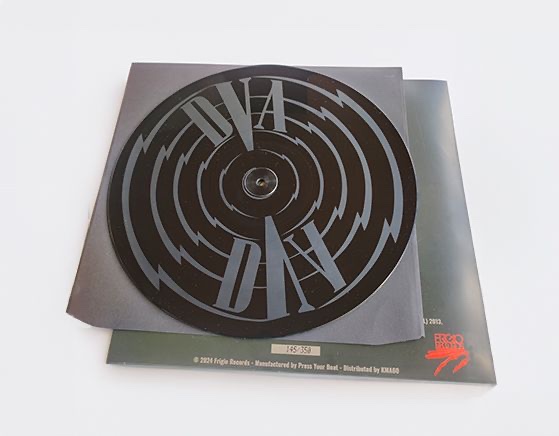
An etched record has a design impressed into a non-audio area of the vinyl. It is an artwork choice with a real consequence for the track plan: the etched area is not playable audio. A full etched side works best when the programme fits comfortably on the other side, or when a multi-disc release leaves a side free.
Decide on the programme first
Before designing anything, confirm the running time and sequence of the music. If you need audio on both sides of a single record, a full-side etching is not the right configuration. Some projects use artwork only in an unused portion of a side, but that depends on the cutting and manufacturing setup; ask for a feasibility check rather than assuming it is available.
Design for the pressed surface
An etching is not printed in ink. Its appearance comes from the way the pressed surface catches light, so fine details and soft gradients may not read as they do on a screen. Prepare the design to the plant's template and technical requirements. Vector artwork is commonly requested, but we will confirm the exact file format, line weight and usable area for your project before you finalise the design.
The record in the photograph is an example of an etched side produced for a Press Your Beat project. It shows why a bold, graphic composition is often more effective than tiny text.
Include it in the quote and approval process
Etching changes the production specification and can affect price and timing. Put it in the first quote request, alongside format, quantity, vinyl colour, packaging and the audio programme. Review the etching artwork separately from the sleeve and labels; each uses its own production files.
If you have a release where one side could become artwork, send us the track lengths and your idea. We can check the available configuration and explain its cost before you commit to the design.